
Background
Can luxury authentication be automated with technology?
Gugus, Korea's No. 1 pre-owned luxury marketplace, performs tens of thousands of authentications a year. Its growth rests on the expertise of skilled authenticators and the customer trust built on accurate authentication. However, rising transaction volumes, higher consumer expectations for authenticity verification and the need for more efficient operations called for a systematic, technology-based response that could improve both the quality and speed of authentication. Gugus had tried to adopt AI-based authentication before, but the project stalled because the data was not structured and the problem was not clearly defined. This project was therefore planned not just as model development but as a full review of the prerequisites for adopting AI: problem definition, data structure design and product design based on user experience. Letsur defined the project as a strategic initiative to build Gugus's digital authentication system and took a comprehensive approach that covered improving how authentication data is used, structuring authentication work and designing the product around user experience. This supports not only short-term efficiency but also Gugus's mid- to long-term goals of establishing AI-based authentication standards and building data capabilities within the organization.

Key challenges
Diagnosis and design for solving luxury authentication with technology
1. From data to structure: cleaning the data
First, we surveyed all the images, authentication results, brand information and serial data accumulated at Gugus and redefined them into a structure suitable for AI training. The existing data was sufficient for authentication work, but it was too unstructured for model training, which limited its consistency and scalability.
Working with the authenticators, Letsur restructured key authentication points such as serial number locations, logo patterns and areas of wear into standardized inputs, and designed data cleaning templates so new data could keep accumulating. This laid the foundation for a cycle of continuous learning and improvement that goes beyond a single project.
Luxury authentication framework
2. AI designed for collaboration, not automation
The AI had originally been designed around the broad goal of having it automatically judge whether an item is genuine. Based on feedback from the actual users, the authenticators, we redefined its role.
Letsur broke the authentication process into four steps: (1) serial number recognition, (2) extraction of authentication points, (3) anomaly detection and (4) support for the final judgment. We then designed specific subtasks the AI can perform at each step. As a result, the AI was repositioned as a tool that supports the authenticator's judgment rather than making the final call, and we were able to build a UX that fits naturally into the actual workflow.
3. Benchmarking global success stories
We benchmarked overseas luxury platforms that run successful AI authentication systems and analyzed their key feature flows, such as automatic serial number detection, automatically generated analysis reports and confidence indicators.
Based on this, we designed features that set Gugus apart: authenticator-based recommendations, automated reports that present both quantitative and qualitative assessments, and serial number-based pre-filtering to improve authentication accuracy. Each feature was structured to deliver real value to users and authenticators.
4. Designing the experience, not just the technology
To make it a product authenticators would actually use, we designed at the product level rather than simply implementing features. Through interviews with authenticators, we analyzed their workflow and clearly defined the screen flow, input and output structure and exception handling for each step.
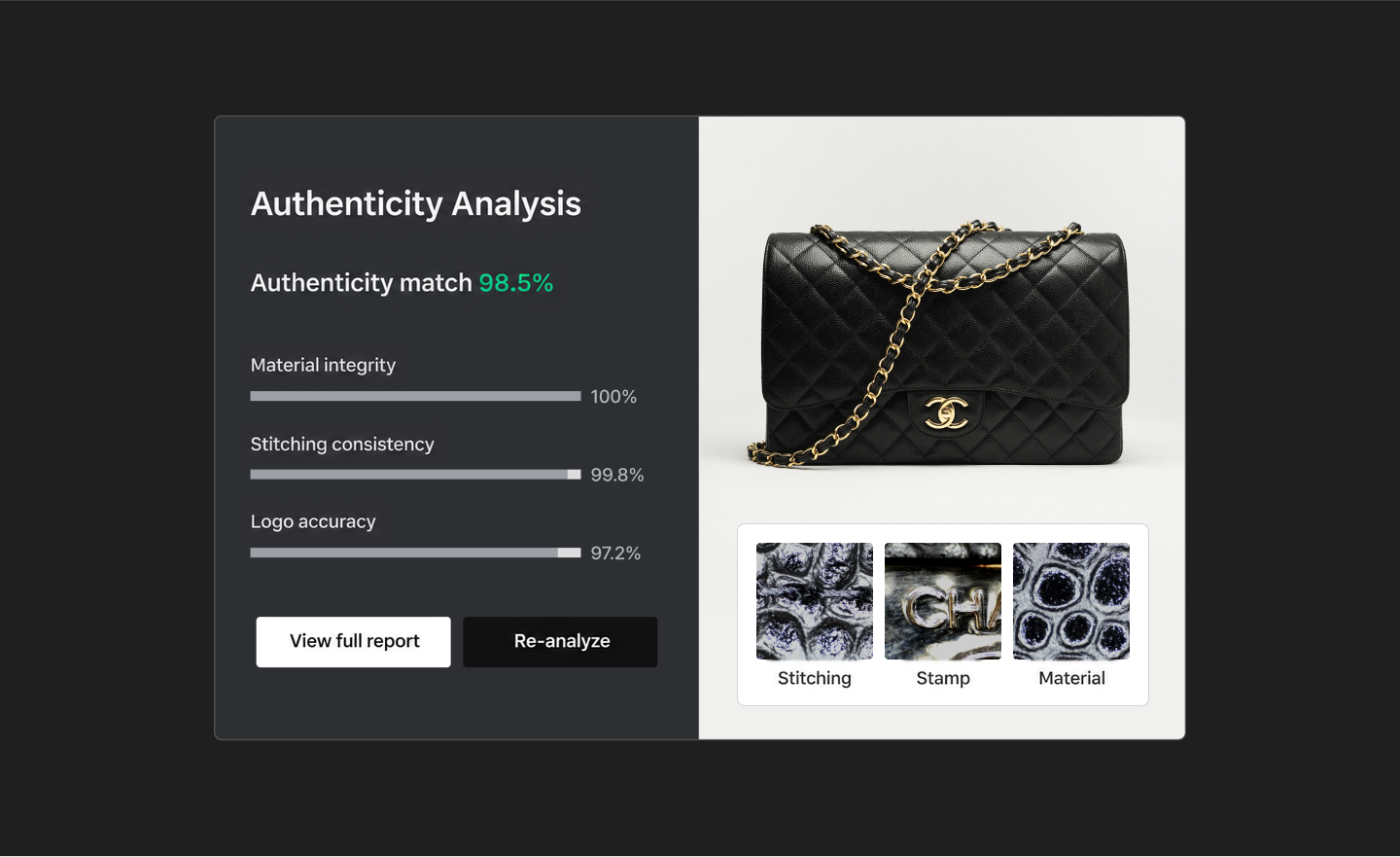
To increase trust in the AI's results, we built a refined user interface that shows the evidence behind each result, lets users request a manual review and provides supporting confidence indicators.
Results
Less repetition, more accuracy and trust
1. 40% less time on repetitive work
Through this project, Gugus went beyond simply adding an AI feature and built the foundation of an authentication support system that integrates naturally into authenticators' actual workflow. One of the biggest achievements was structuring data assets that had previously been unstructured and designing an AI cycle that enables continuous learning on top of them.
The impact is visible in day-to-day operations as well. In the early stages of authentication, the AI automatically recognizes serial numbers and analyzes anomalies, cutting authenticators' repetitive work by about 40% on average. By reducing differences in judgment between authenticators, it is also expected to lower the rate of re-authentication requests.
2. Automated authentication reports that build customer trust
Automated authentication reports are also changing customer service. By presenting the authenticator's judgment together with the AI's quantitative analysis, customers accept the results with greater confidence, which strengthens the expertise and transparency of the Gugus brand.
3. A system that learns together with authenticators
Above all, the most meaningful change is that AI has taken root not as a standalone tool but as a collaborative system that supports authenticators' judgment and evolves based on data. Corrections and additions made by authenticators are automatically logged and used as data for future model improvements. As a result, the system can evolve into an iterative learning structure based on active learning and keep improving its ability to handle exceptional cases.
The project did not stop at building a tool. It became a turning point in establishing an authentication system in which people and AI work together inside the organization. This will be a strategic asset as Gugus leads the future standard for AI-based pre-owned luxury authentication.
Takeaways
AI is a strategic asset that drives the growth of luxury authentication
This project went beyond technical implementation. It was an organization-wide structural innovation that redefined authentication work as a whole. The two takeaways below can serve as fundamental criteria for similar projects in the future.
1. Adopting technology means redesigning operations.
AI should be designed not as a means of automating existing processes but as a tool that structures both the authenticators' workflow and the organization's decision-making. In this project, we broke the authentication process into detailed steps and defined subtasks so AI could contribute at each one, which made it far more applicable in the field.
2. Structured data is an organizational capability and an asset.
It is not just a means of training AI but a core foundation that connects to standardized authentication criteria, consistent customer service and a cycle for advancing models. As this case shows, designing data so it can be cleaned, accumulated and expanded determines the digital competitiveness of the entire organization.
Letsur will continue to work with companies that combine data and expertise to create projects that go beyond implementing features and lead to real problem solving and organizational change. Especially in fields like authentication, where qualitative judgment is central, the key is designing how technology can change the standards and culture inside an organization. Letsur will use AI to refine the standards of trust, design structures that feed those standards back into data and help technology become a core competitive advantage for businesses.